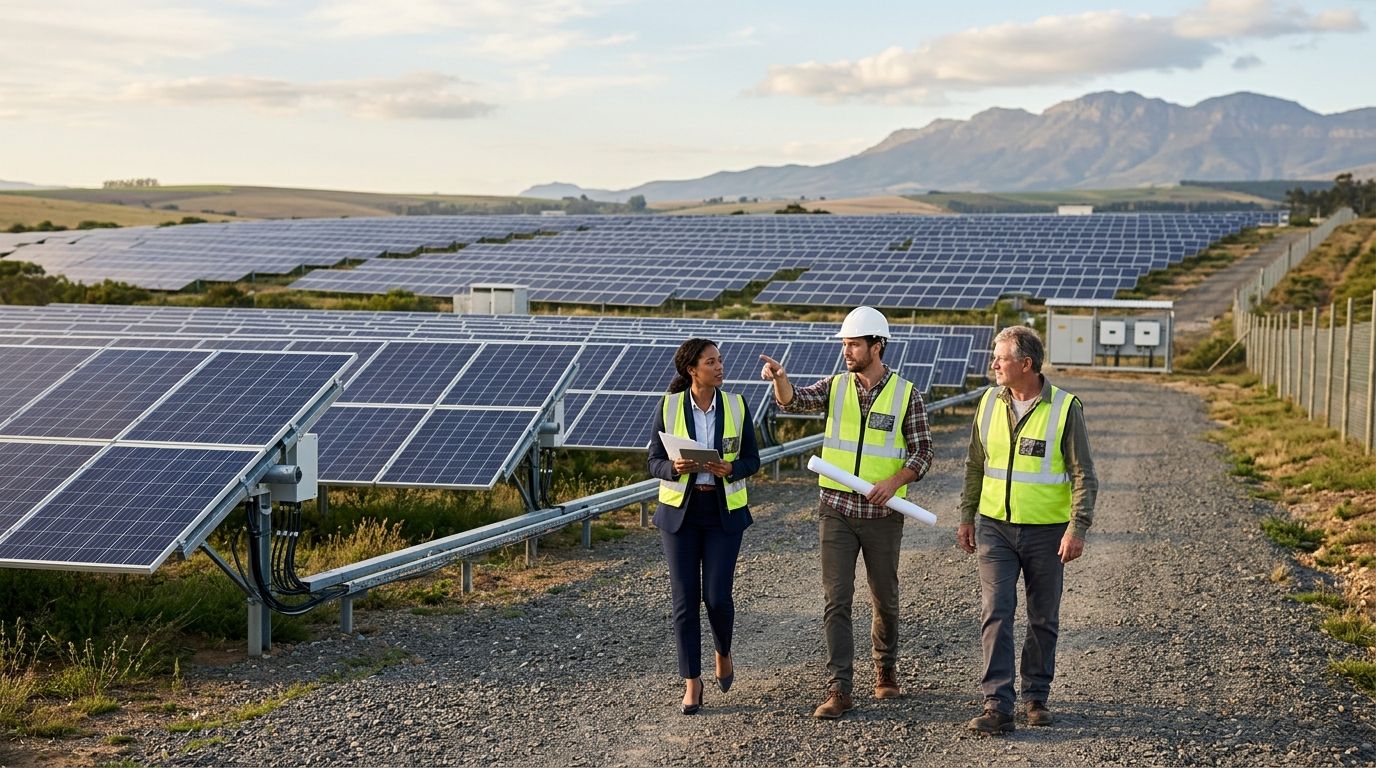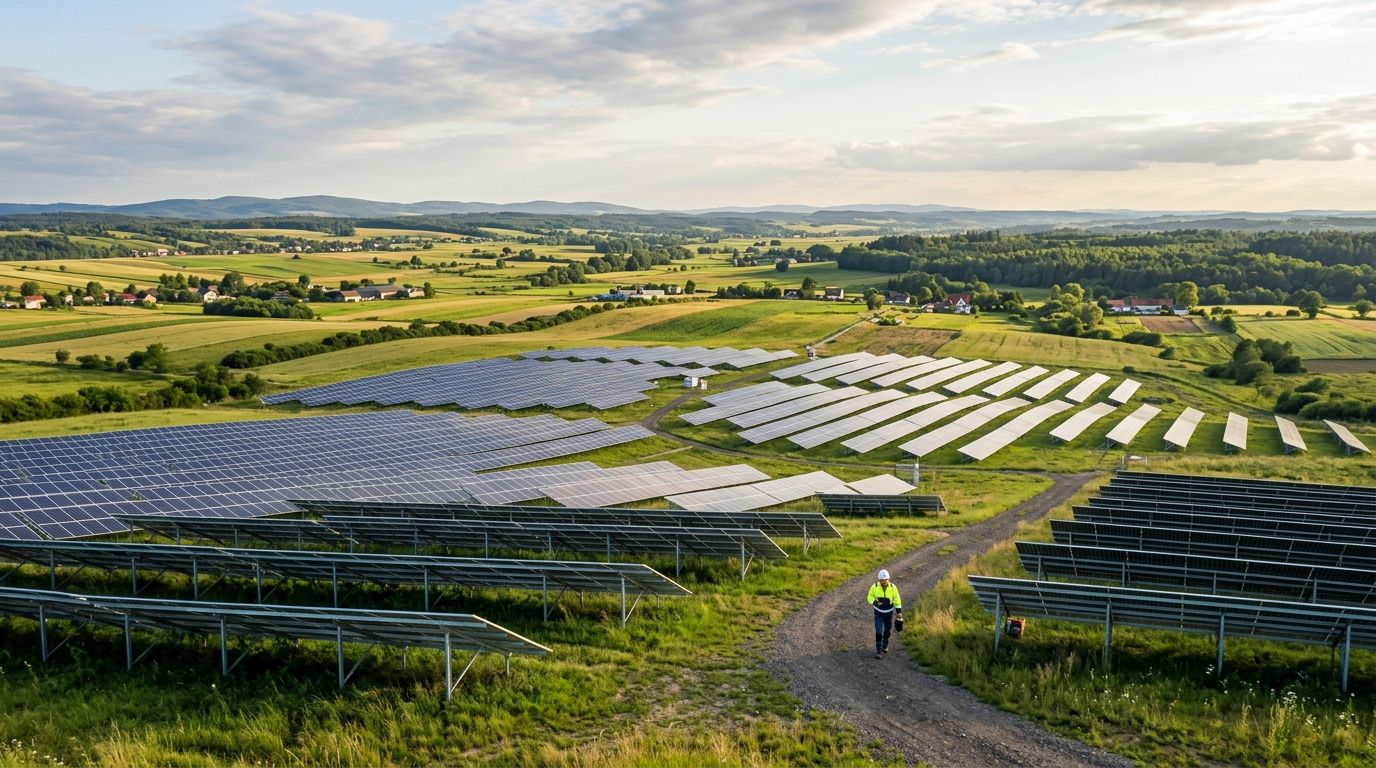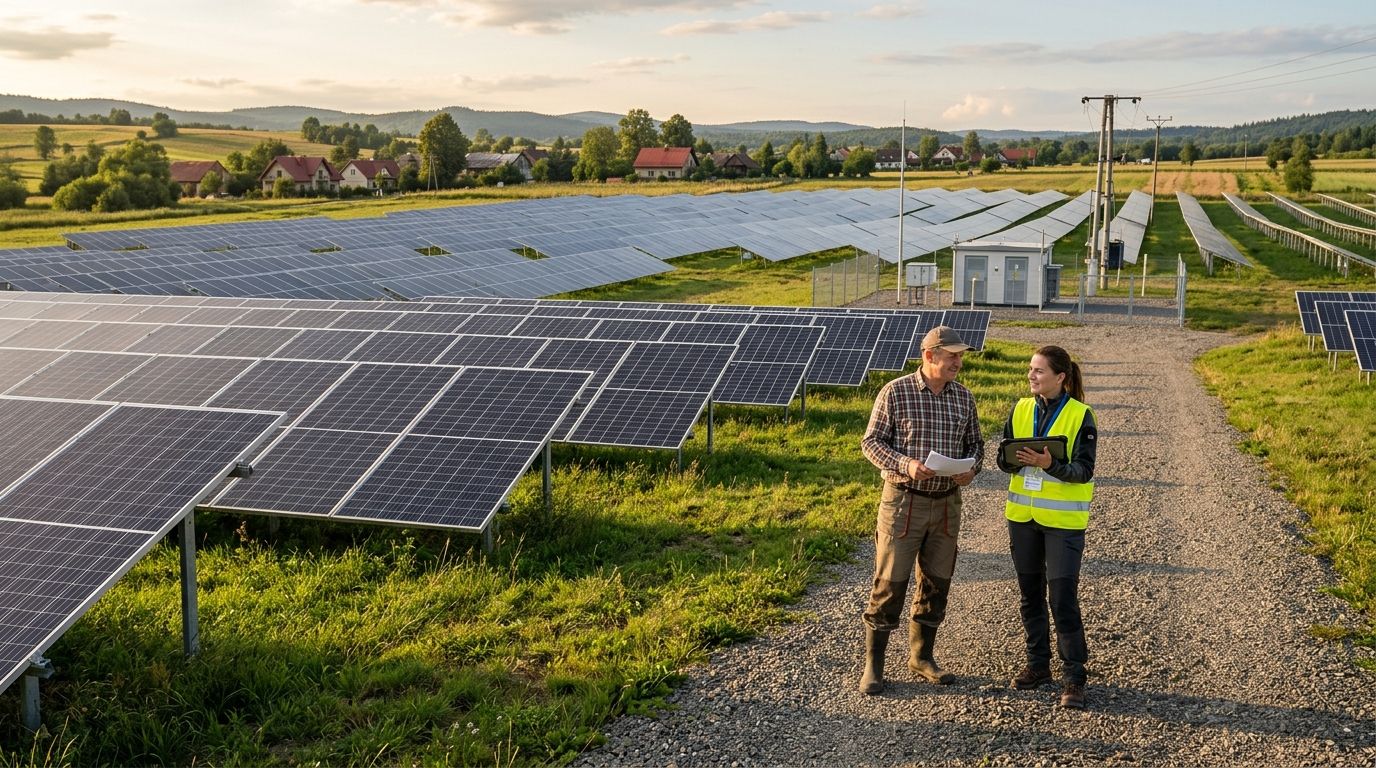
Solar farm land lease payments in Poland don't follow one fixed rate — the amount depends on land classification, project capacity, grid connection distance, and contract structure, and no single national figure applies across regions in 2026.
What gets missed in most quick answers is that the option period (while a developer secures permits) usually pays far less per hectare than the operating lease that kicks in once the project is built and connected — landowners who sign without separating those two phases often lock in years of below-market payments.
- Solar farm land lease rates in Poland vary by land class, capacity, and region — there is no single 2026 national rate.
- Lease contracts typically split into an option phase and a build/operating phase, each paid differently.
- Land classified as low-quality agricultural (class IV-VI) generally attracts more developer interest than prime cropland.
- Contract length usually spans the operating life of the installation, with periodic indexation clauses.
- Arena Energy clears title and structures lease terms for landowners before connecting them to solar, wind, or BESS developers.
Why this matters
Landowners in Poland are being approached by developers, brokers, and funds at a pace that has picked up sharply since 2023, and 2026 is shaping up to be another active year for solar and battery storage siting. Signing the first offer that arrives is the most common mistake — rates, contract terms, and legal protections differ enormously between agreements, and a poorly drafted lease can tie up land for decades at a rate that never adjusts.
Getting the land legally cleared (title checks, mortgage releases, heir consolidation) before negotiating also changes your leverage. A parcel with unresolved title issues gets weaker offers because the developer inherits the legal risk.
How much does solar farm land lease pay in Poland?
The honest answer is that lease pay in Poland is negotiated parcel by parcel, and the structure matters as much as the headline number. Most agreements follow a two-stage model:
| Phase | What it covers | Typical duration |
|---|---|---|
| Option/development phase | Developer secures permits, grid connection, environmental approvals | 2-4 years |
| Lease/operating phase | Land is used for the built solar, wind, or BESS installation | 25-30 years, often with renewal clauses |
During the option phase, payments are usually modest because the project may never get built — the developer is paying for exclusivity, not land use. Once construction starts and the operating lease begins, payments step up substantially because the land is now generating revenue for the developer.
The practical takeaway: never accept an option-phase rate as if it were the operating rate. Ask for both figures in writing, and make sure the contract specifies exactly when the higher rate begins.
Solar lease payments: what determines the rate
Solar projects generally pay based on installed capacity per hectare, which means land that supports a denser array (flat terrain, good sun exposure, close to a substation) tends to command stronger offers than marginal or shaded parcels. Best for: landowners with flat, low-grade agricultural land near existing grid infrastructure.
Wind lease payments: what determines the rate
Wind lease structures differ because turbines occupy a small footprint but require a much larger exclusion zone and access easements across surrounding land — payments often combine a base fee for the turbine pad with a smaller per-hectare fee for the buffer area. Best for: landowners with larger contiguous holdings in designated wind corridors.
BESS lease payments: what determines the rate
Battery energy storage sites need far less land than solar or wind, but they pay a premium per hectare because the footprint is small and grid connection speed matters more than acreage — a parcel next to a substation with spare grid capacity is worth more for BESS than an equivalent parcel three kilometers away. Best for: small parcels with direct proximity to substations or high-voltage lines.
Why solar farm land lease rates vary
- Land classification (bonitacja class) — lower-grade agricultural classes (IV-VI) are easier to convert for energy use and typically attract more developer competition than protected class I-III cropland.
- Proximity to grid connection points — parcels near substations or high-voltage lines cost developers less to connect, which shows up in the offer.
- Project capacity planned for the site — larger planned capacity generally supports higher total lease payments, even if the per-hectare rate looks similar.
- Contract length and indexation — a 25-30 year lease with an inflation-linked escalation clause protects the landowner far better than a flat rate locked for three decades.
- Regional demand from developers and funds — regions with strong grid capacity and municipal support for renewable siting see more competing offers.
- Whether the deal is structured as a lease, easement, or purchase option — each carries different payment timing and different legal exposure for the landowner.
“The option-phase rate and the operating-phase rate are never the same number — read the contract for both before signing anything.”
Getting title and heir issues resolved before signing changes the negotiating position substantially. Arena Energy works through exactly this step — clearing agricultural land legally, then structuring lease or option agreements between landowners and solar, wind, and BESS developers — before the land ever reaches a fund's clean-land portfolio.
Get your land assessed for lease
Find out what your parcel qualifies for before signing any offer.
Is land lease income taxed in Poland?
Lease income from agricultural land used for solar, wind, or BESS projects is generally treated as taxable income under Polish tax rules, and the classification can shift once the land use changes from agricultural to industrial/energy use — landowners should confirm the applicable treatment with a tax advisor before signing, since it affects net payment, not just the gross lease figure.
How long are solar land lease contracts in Poland?
Most solar land lease contracts in Poland run for the operating life of the installation, commonly 25 to 30 years, following the option/development phase described above. Renewal or extension clauses are common, so check whether the contract auto-renews or requires renegotiation at the end of the term.
Can farmers keep farming the land during the option period?
During the option phase, farmers can typically continue agricultural use of the land since construction hasn't started yet, but this depends entirely on what the specific contract allows. Once the operating lease begins and the installation is built, agricultural use of the leased footprint generally stops for the length of the contract.
FAQ
How much does solar farm land lease pay in Poland in 2026?
There is no fixed national rate — solar farm land lease pay in Poland depends on land classification, project capacity, grid proximity, and whether the parcel is in the option phase or the operating lease phase. Get a site-specific assessment rather than relying on a quoted average.
What land qualifies best for solar leasing in Poland?
Flat, low-grade agricultural land (class IV-VI) near existing grid infrastructure qualifies best for solar leasing. Prime cropland (class I-III) faces more restrictions on conversion to energy use.
Is a solar lease better than selling the land outright?
A lease keeps ownership with the landowner and provides recurring payments over 25-30 years, while a sale is a one-time payment that transfers ownership permanently. Which is better depends on the landowner's long-term goals and whether they want to retain the asset.
Do wind and BESS projects pay differently than solar?
Yes — wind projects often combine a turbine-pad fee with a smaller buffer-area fee, while BESS projects pay a premium per hectare on a much smaller footprint because grid proximity matters more than acreage. Solar payments are typically tied to installed capacity per hectare.
What happens to the lease if the developer doesn't build the project?
If the option phase ends without construction starting, the agreement typically terminates or reverts based on the option-period terms, and the landowner keeps whatever option payments were already made. This is why separating option-phase and operating-phase terms in the contract matters.
Does unresolved land title affect the lease offer?
Yes — unresolved title, mortgage encumbrances, or unconsolidated heir ownership weaken the offer because the developer inherits legal risk. Clearing title before negotiating generally strengthens the landowner's position.
How long does it take to get land under a solar lease contract?
Timelines vary by project and depend on permitting, grid connection approval, and title clearance, so there is no fixed number of months that applies everywhere. Land that is already legally clear moves through the option phase faster than land with unresolved ownership issues.
Can a landowner negotiate the lease rate?
Yes — lease rates, contract length, and indexation clauses are negotiable, and parcels near substations or in high-demand regions have more leverage. Getting more than one offer before signing is the most reliable way to confirm a rate is competitive.
One last thing
The detail most landowners miss isn't the rate — it's the indexation clause. A lease signed in 2026 without an inflation adjustment can be worth noticeably less in real terms by year 15 of a 25-30 year term, even if the headline rate looked competitive on signing day. Ask for the escalation mechanism before comparing any two offers on rate alone.